
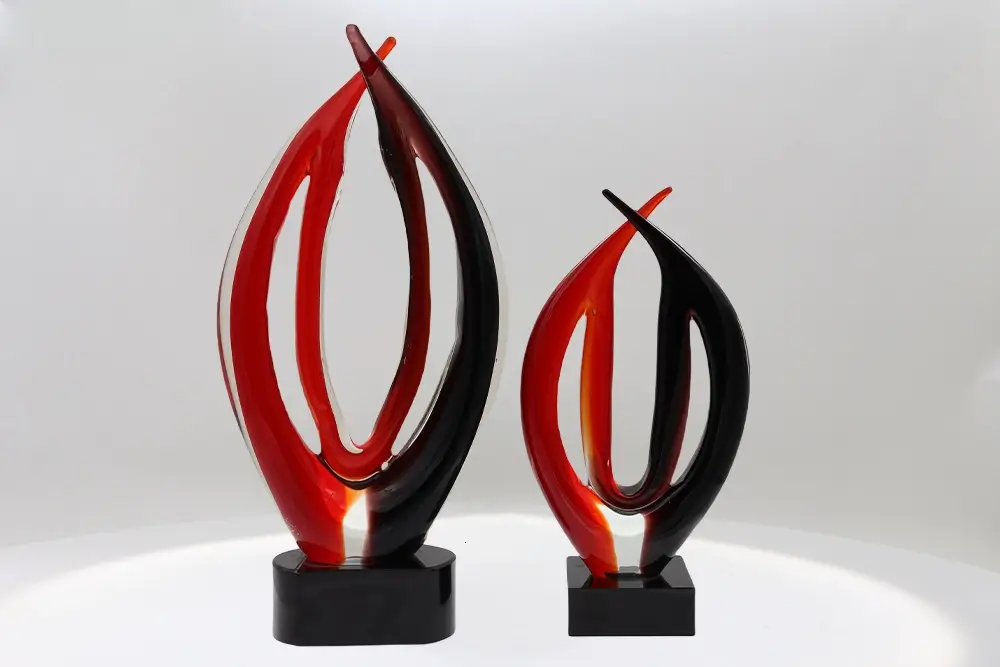
The Transcendent Art of Glass Sculpture
A glass sculpture represents the pinnacle of thermal artistry, transforming volatile molten silica into a permanent, solid state of beauty. Unlike stone or metal, glass offers a unique interaction with light, allowing a glass sculpture to change its appearance based on the angle of illumination and the viewer’s perspective. From the ancient techniques of core-forming to modern kiln-casting and lampworking, artists manipulate this material to achieve transparency, opacity, or vibrant iridescence. The creation of a glass sculpture is a high-stakes process involving extreme temperatures, often exceeding 1000°C, where the artist must work in harmony with the material’s fluid dynamics to capture movement in a frozen moment.
Collectors and interior designers prize glass sculptures for their ability to act as focal points within a space. Whether it is a delicate, hand-blown animal figurine or a monumental abstract installation for a public plaza, the medium conveys a sense of fragility that belies its actual structural strength. Contemporary glass sculpture often incorporates mixed media, combining glass with metal, wood, or light installations to push the boundaries of modern design. The market for these artworks is robust, ranging from affordable handmade souvenirs to high-value investment pieces by renowned masters. As a symbol of clarity and innovation, a glass sculpture remains a timeless testament to human creativity and the mastery of fire.
FAQ
Q: What defines a glass sculpture?
A: A glass sculpture is a three-dimensional artwork created primarily from glass, using techniques like blowing, casting, fusing, or carving to achieve artistic expression.
Q: How are large glass sculptures made?
A: Large pieces are typically created using kiln-casting, where glass chunks are melted into a mold, or through hot-sculpting techniques where molten glass is shaped on a blowpipe.
Q: Is a glass sculpture durable?
A: While it can break under impact, glass is chemically stable and does not degrade over time. Properly annealed sculptures are durable and retain their clarity indefinitely.
Q: Can glass sculptures be customized?
A: Yes, artists and manufacturers frequently create custom glass sculptures for corporate lobbies, private collections, and architectural installations.
Q: How do I display a glass sculpture?
A: It should be placed on a stable surface away from high-traffic areas to prevent accidental knocks. Lighting is crucial; spotlights can enhance its refractive qualities.